Sponsored by Tour Old Wilmington

History Walking and Haunted Cotton Exchange Tours.
Open 7 days a week, day and evening, year round. Call for tour times 910-409-4300 Or e mail us at

info.touroldwilmington@gmail.com

This site is dedicated to the commerce of Wilmington and the State of North Carolina. You are welcome to contribute to the site!
Showing posts with label St. James Church. Show all posts

Saturday, March 17, 2012

St. James Church

St. James Church

Corner of Third and Market Streets houses a famous painting of the head of Christ. Ecce Horno, “Behold the Man, “which is estimated to be over 500 years old. A portrait of Christ with a crown of thorns on his head and blood on his face and body.  The painting was captured from a Spanish pirate ship in 1748 at a settlement on the Cape Fear River twenty miles below Wilmington.  The artist who painted the portrait is unknown, although it is thought to be Francisco Pacheon, who lived in Spain in the sixteenth century.

Source: A Pictorial History of Wilmington by Anne Russell

St. James Episcopal Church was established in the year 1729. Proceeds from the sale of goods that had been salvaged from the Fortuna, a Spanish ship that was abandoned after the Spanish had an unsuccessful attack on Wilmington, went to the construction of St. James and its sister church, St. Philip's Church. The original church building for St. James was built and completed in 1770. The church took on a vital role in the American Revolutionary War. British General Lord Cornwallis took up residency in a house across the street from St. James. The British used St. James as a hospital, and later as a riding school to train the British soldiers. The church was torn down and rebuilt in 1839, the new building constructed from the original bricks of the church. Architect Thomas U. Walter, who designed the dome of the United States Capitol, designed the new church building. St. James, yet again, found itself taking a role in war. In the American Civil War, the church was used as a hospital for Union soldiers, who had at the time taken the confederate city of Wilmington after the fall of Fort Fisher. The church's parish house was built in 1923. Next to the parish house was a house built by Henry Bacon, the architect of the Lincoln Memorial in 1901. The Bacon house later became church offices. The church is the resting place of three Episcopal Bishops, Robert Strange, Thomas Atkinson, and Thomas H. Wright, who are buried underneath the church.[2][3]
Church interior
St. James Episcopal Church's oak altar and reredos were carved by Silas McBee, depicting the Nativity, Crucifixion, and Resurrection of Jesus. McBee also designed the Bishop's chair and two of the stained glass windows, imcluding The Resurrection of Christ.
Ecce Homo
A painting of Christ was found in the captain's cabin of the Fortuna by scavengers when being salvaged. The painting turned out to have been done by Spanish artist Francisco Pacheco, and was named Ecce Homo, Latin for Behold the Man. The painting was given to St. James Episcopal Church in 1751, and still resides in the church.[4]
Notable burials
The historic graveyard at St. James has many notable burials.[5] These burials include:
References
1.                           ^ http://www.stjamesp.org/refresh/templates/about.php?id=3
3.                           ^ http://www.stjamesp.org/refresh/templates/about.php?id=4

Thursday, February 2, 2012

History of Wilmington NC


According to the Julian calendar, Wilmington, North Carolina, was incorporated in 1739.  Located on the east bank of the Cape Fear River, the original town is 28 nautical miles from the Atlantic Ocean.  Built on several rises, more like sand dunes than hills, the town ascends 50 feet from the river shoreline.  Despite navigational difficulties along the river, the town grew to become the largest city in the state before the Civil War.  It remained so until the second decade of the 20th century, when the state’s Piedmont tobacco and textile towns rose to prominence. 

Wilmington’s historical significance is reflected in the variety of architectural styles, streetscapes and in other aspects of its material culture.  The Colonial town is most visible in the original grid pattern of the streets, the numbered streets running from north to south and the named streets running from east to west.  Several periods of rapid growth have altered the city’s passage through time.  Very few buildings remain from the early town because of the large fires and antebellum growth stimulated by the 1840 opening of the railroad. 

Three other periods of sustained growth are also noteworthy.  Recovery from the Civil War with increased port and rail expansion precipitated substantial commercial activity in the late nineteenth and early twentieth centuries.  Increased business and industry, particularly of cotton and fertilizer, provide a building boom both commercially and residentially, including moves to the first suburbs.  This economic activity spread across the region, evident most notably in the development of the nearby beaches.  After a period of decline during the Great Depression, Wilmington experienced another burst of growth during World War II Military facilities and the North Carolina Shipbuilding Company brought an unprecedented number of new residents who needed housing as well as a myriad of businesses to support their daily lives.  The most recent growth can in the 1990s, after Wilmington was connected to the rest of the country by Interstate Highway 40. 


Source: Wilmington Lost But Not Forgotten by Beverly Tetterron
To purchase the book please visit the Two Sisters Bookery @ the Cotton Exchange in Wilmington NC

Thursday, December 8, 2011

Haunted Cotton Exchange


Top Toad at the Cotton Exchange! 
Strange things are happening there every day!  One of the most haunted locations in Wilmington! 


Haunted Cotton Exchange Tour 

Man from the River 

Friday, May 21, 2010

Historic Wilmington Foundation Plaques

To be eligible for a Historic Wilmington Foundation Plaque, a building must be over 75 years old and be located in New Hanover County. Buildings over 50 years old at Wrightsville Beach, Carolina Beach and Kure Beach are also eligible for a plaque.


To apply for a plaque, please contact the Foundation at 910.762.2511 or email to receive an application.


Application Review Process
The Plaque Committee meets on the second Wednesday of each month to review plaque applications. Applications must be submitted to the Foundation office at least one week prior to the meeting. The Committee reviews applications in the order they are received, and it is common for the process to take several months.


The Research
The application is designed to lead you step-by-step through your research. If the Committee needs more information, a member contacts you and explains what information you need to gather and present before the next meeting. If you choose, you can hire someone to do the research for you. Call HWF to receive the names of architectural historians who will complete the research for you for a fee.


The Plaque Text
After the review process is complete, the Plaque Committee composes a text for your building. The Foundation will send a copy of the text to you, and you may then order your hand-painted plaque.


The Price
The price of a new plaque is $350 for members and $400 for non-members (includes a one-year, tax deductible family membership to the HWF). Call for the cost of a replacement plaque. The price of the plaque must be paid in full before the information is sent to the sign company to be painted. Buildings over 100 years old receive a black plaque and those from 75 to 100 years old receive a maroon color plaque. Historic alleys over 75 years receive green plaques. 50 year-old beach buildings receive a sea oats color plaque with black lettering. Foundation staff will call you when the plaque is ready.


A project completed in partnership with NHC Public Library.

Tuesday, May 18, 2010

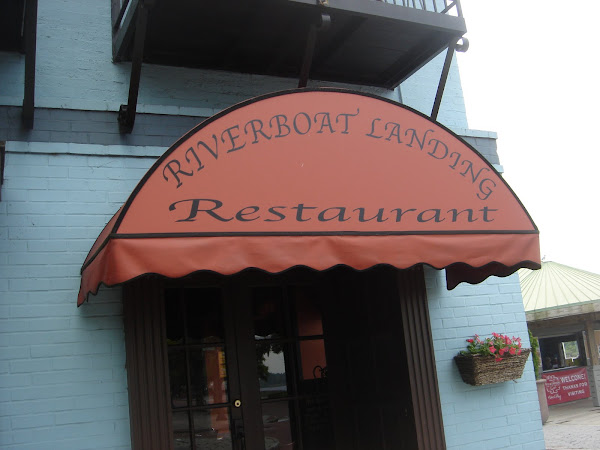
River Boat Landing

River Boat Landing Corner of Market and Water Streets 


End of Market on Water facing away from the Cape Fear River 


Lori on Tour 

Old Peanut Factory Downtown Wilmington NC

he old peanut factory is located in the ally behind the River Boat Landing and the Mixtos Restaurants.  
Old Peanut Factory in ally off of Water, half block down from Market. 
The ally, building on the right. 


Picture thru the window into the building , 2nd floor is gone, note the earth quake rods. 

Inside the building 


Many people think these were installed  a hurricane supports but actually they were installed as earth quake supports installed in the mid and late 1800s.  
Tour Old Wilmington

Tour Old Wilmington NC

We love the old buildings in Wilmington NC.  If you have a pic or vid you would like to share please do so. You'll also see some great pics from Oakdale Cemetery located at the end of 15th street.
Please join us on a stroll in historic Wilmington NC


Lori and Rusty
Tour Old Wilmington

One of the haunted locations in Wilmington NC

Haunted Cotton Exchange Tours tm
Presented by
Tour Old Wilmington tm
Scary, creepy and mostly ghostly
Tales of the Cotton Exchange!
Chills and Thrills await you at the one of the most historic & haunted locations in Wilmington.
Tours 7 days a week
Under 12 Free
All Others $12 each
Group, Private and Bus Tours available
Call for Tour Times
(910) 409-4300
www.HauntedCottonExchange.blogspot.com
Haunted Tours start next to the German Café on the parking lot side.

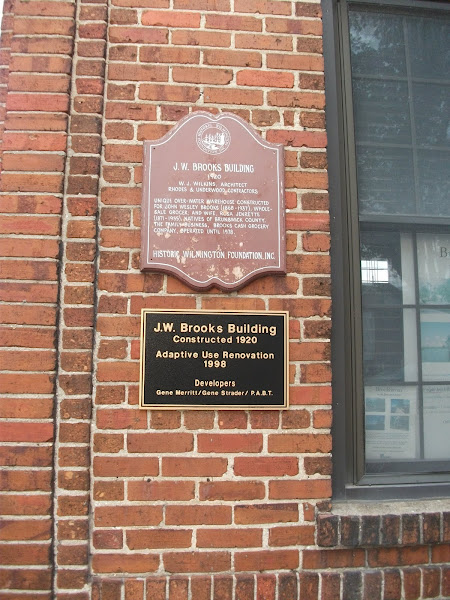
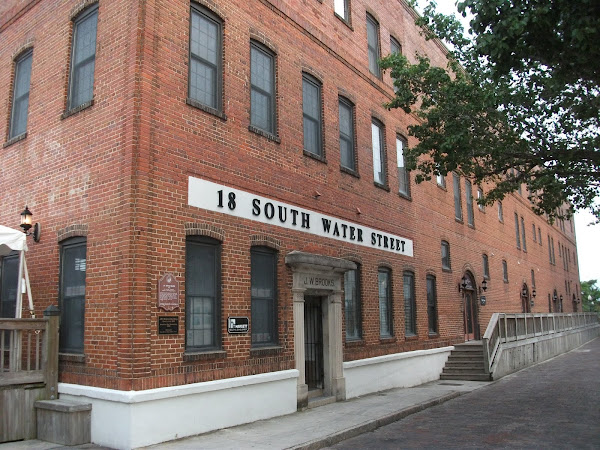
JM Brooks Building

JM Brooks Building

10 South Water Street

10 South Water Street

River Boat Landing

River Boat Landing

Historic Bellamy

Historic Bellamy

Tom's Drug Store

Tom's Drug Store
Powered By Blogger

Search This Blog

Face Book Like